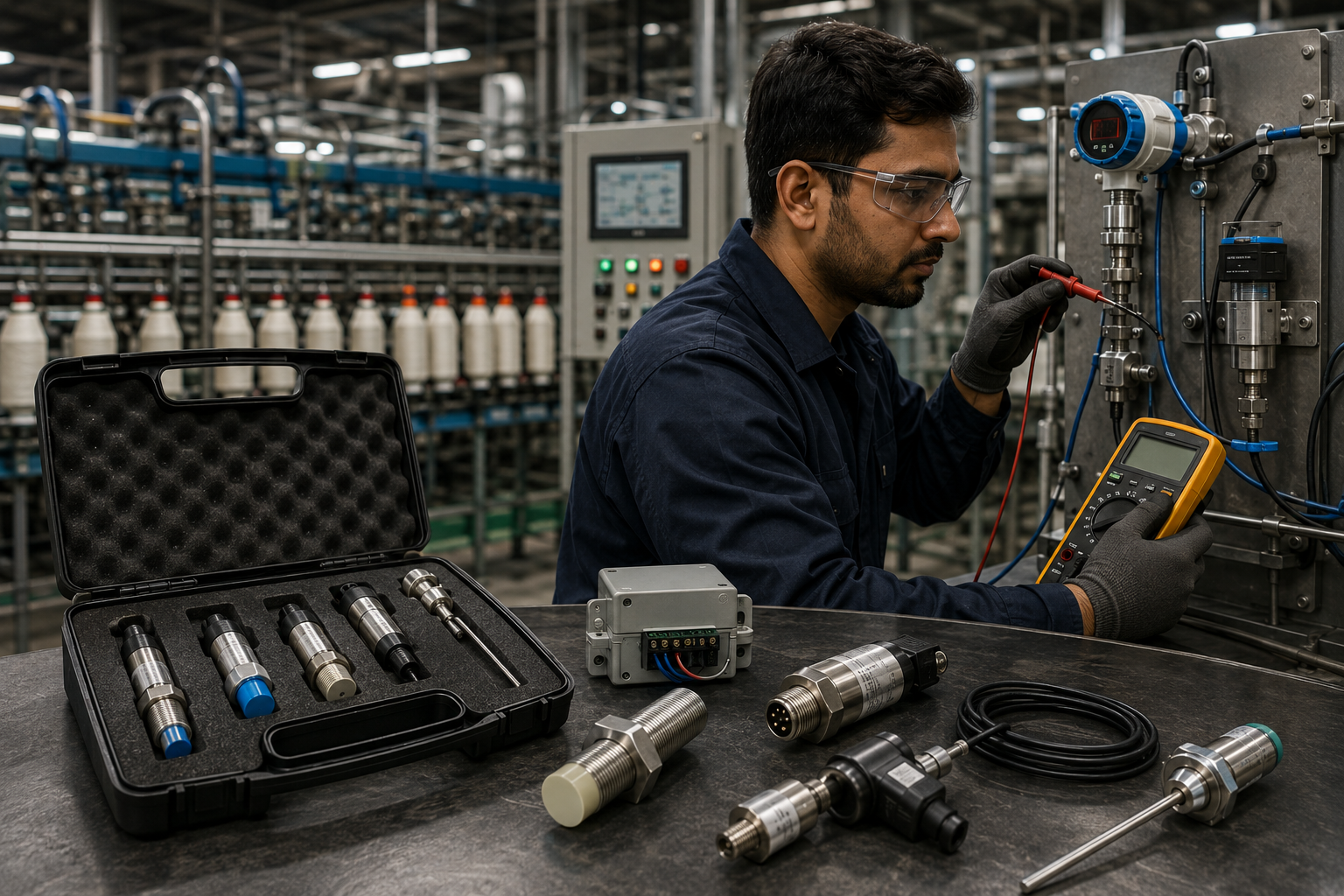
Proximity sensors, pressure transducers, and temperature probes are the eyes of any automated production line, and a single misbehaving sensor can trigger false machine stops or, worse, let a real fault go undetected. In dusty and humid textile environments, sensor drift is one of the most common and most misdiagnosed causes of unplanned downtime.
Key Troubleshooting Steps:
- Check Supply Voltage at the Sensor: A drooping 24V DC supply, often caused by long cable runs or overloaded power rails, causes inductive proximity sensors to give inconsistent detection ranges.
- Inspect for Metal Dust & Fiber Buildup: Lint and metal shavings accumulating on sensor faces in textile and metalworking plants create false triggering or missed detections a simple cleaning often resolves "random" faults.
- Verify Shielded Cable Grounding: Analog 4-20mA transducer signals are highly sensitive to electromagnetic noise from nearby VFDs and contactors; improperly grounded shielding is a leading cause of erratic readings.
- Cross-Check with a Second Reference Sensor: Before replacing a suspected faulty sensor, temporarily swap in a known-good unit of the same type to confirm whether the fault is in the sensor or the wiring/PLC input card.
- MegaHz supplies and repairs AC servo drives and motors from Yaskawa, Mitsubishi, Delta, and other major brands, and our engineering team can help plant managers right-size a servo upgrade before committing to a purchase avoiding costly trial-and-error on the production floor.